Journal
From a brief to a filled bottle: how a custom cosmetic actually gets made
La Med India · 15 October 2026 · 3 min read
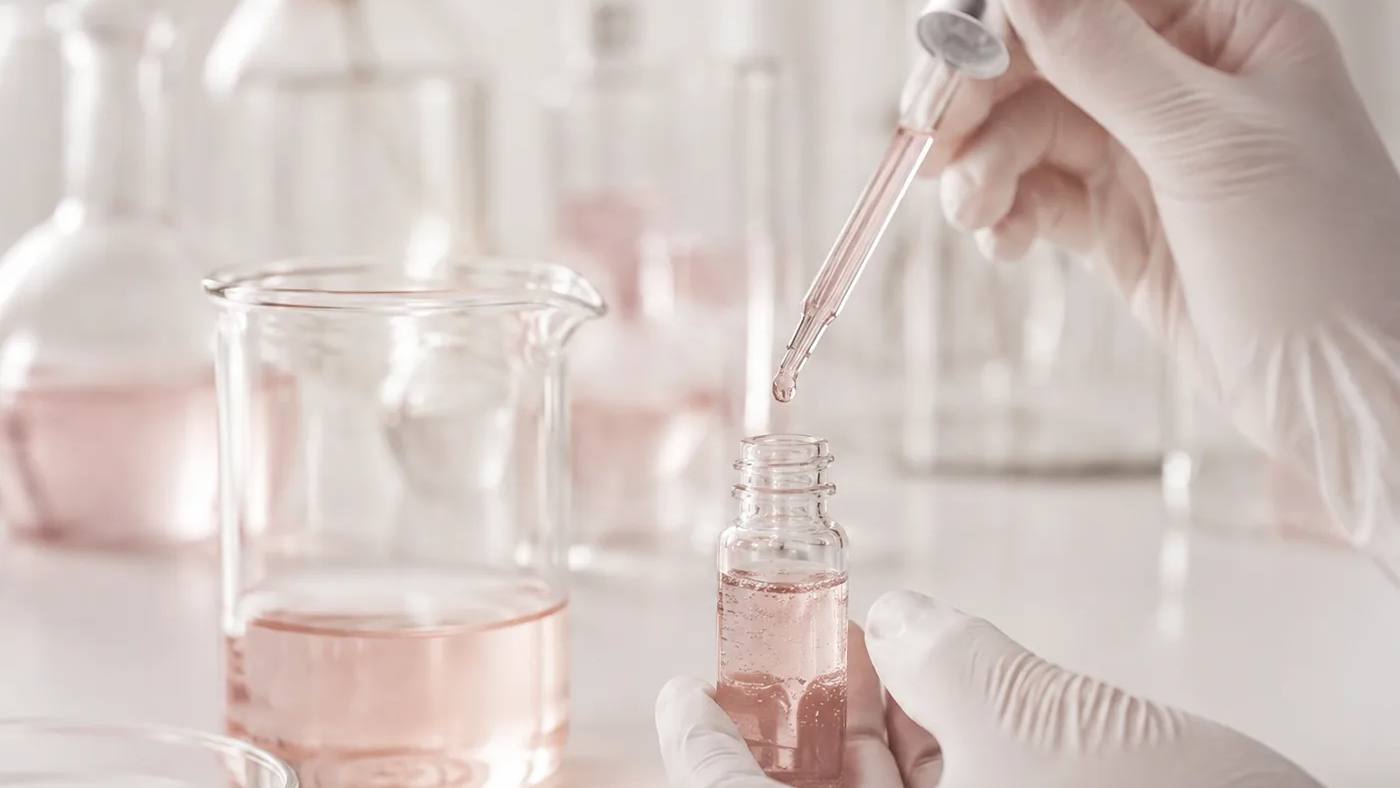
Most people who write to us do not send a formula. They send a feeling: something like a Korean glass-skin toner, but it has to survive a Delhi summer. That is a perfectly good place to start. A brief is not a recipe, and closing the gap between the two is the actual work of a formulation studio.
Here is what happens between your first message and a batch sitting in your packaging, written for founders who have never manufactured anything before.
1. The brief: what you want it to feel like
The most useful brief is not technical. It describes the person using the product, the moment they use it, and what their skin should feel like ninety seconds later. Texture, finish, how fast it sinks in, scent direction, where it sits in a routine. If there is a product you want to beat, name it - we would far rather benchmark against something real than guess.
What helps most at this stage: the category, who it is for, the market it will sell into (that decides what is allowed on the label), roughly where it sits on price, and your non-negotiables. A line like no fragrance, no essential oils, has to sit under sunscreen shapes a formulation more than any adjective will.
2. The playbook: Korean or Western
These are two genuinely different traditions, not a marketing distinction. The K-beauty playbook builds in layers - lightweight, high water content, humectant-led, designed to be worn two or three at a time. The classic Western playbook puts more into one jar: higher actives, richer emulsions, fewer steps.
Indian skin and Indian weather pull toward the first. A brand selling a single hero product usually needs the second. Most briefs land somewhere between the two, and where exactly is better decided now than three samples later.
3. The first sample is a draft, not a delivery
The first sample exists to be criticised. Almost nobody approves one, and nobody should feel awkward about saying so. What we want back is plain language: too heavy, pills under sunscreen, smells like a hospital, takes too long to sink in. Every one of those complaints maps to something specific we can change.
The useful question is never whether the sample is good. It is what you want it to do differently.
Expect a few rounds. Texture and fragrance usually take the most of them, because those are what a customer judges in the first three seconds of using the product.
4. Stability: the part nobody enjoys
Once a formula is agreed, it gets held warm, chilled, cycled between the two, and left sitting in the packaging it will actually ship in. We are watching for separation, colour drift, the scent turning, pH moving, and whether the preservative system holds.
This is the stage brands most want to skip, and the one we will not let you skip. A cream that separates in the back of a courier van in May is a recall, a refund queue, and a review section you cannot edit.
5. Packaging changes the product
Packaging is not the last step. A formula behaves differently in an open jar than in an airless pump. A mist needs a spray mechanism matched to its viscosity, or it spits instead of misting. Some ingredients are unhappy in clear glass. Choosing packaging late usually means testing it all again, so we would rather have that conversation early, even if the artwork comes much later.
6. The batch, and the paperwork
Production runs in-house in Delhi, in a GMP-compliant facility under ISO-certified quality systems. What ships alongside the batch matters as much as what is in the bottle: certificate of analysis, full ingredient and INCI documentation, MSDS where relevant, and export paperwork such as a certificate of origin or free sale certificate where your market asks for it.
Quantities, pricing and timelines depend entirely on the formulation and the packaging it goes into, so we quote those against a real brief instead of publishing a number that would be wrong for most people reading it.
Where to start
Send us the thing you want to make, in your own words. Not a formula and not a spec - the product as you imagine your customer experiencing it. We will tell you honestly what is straightforward, what is harder than it sounds, and what is not worth making at all.
Email [email protected] or message +91 79823 07120 on WhatsApp. Both reach the people who would actually make your product, not a sales desk.
Your Brand, Our Factory
Tell us what you want to create. We'll make it real.
Custom formulation and manufacturing in-house in Delhi since 2005 - K-beauty and classic Western playbooks.
Start Your Formulation